OS House
OS House
Client: S.S. and N.E.O.S.
Architectural Design (2024)
Location: Balkaya, Kırklareli
Set in the rural landscape of Balkaya, Kırklareli, this project was conceived for a family of three, serving as a seasonal getaway with the potential for future year-round living. Given its distance from the city, the layout was specifically designed to host overnight guests. Furthermore, the building's spatial program integrates a woodworking atelier and a home-brewing workshop directly into the main structure.
The primary drivers shaping the architectural design were establishing the precise spatial balance of proximity and separation—between the living quarters and the atelier zones; navigating a steeply inclined topography oriented toward the eastern vistas; and addressing the limited infrastructural capabilities dictated by the site's location at the village's forest boundary.
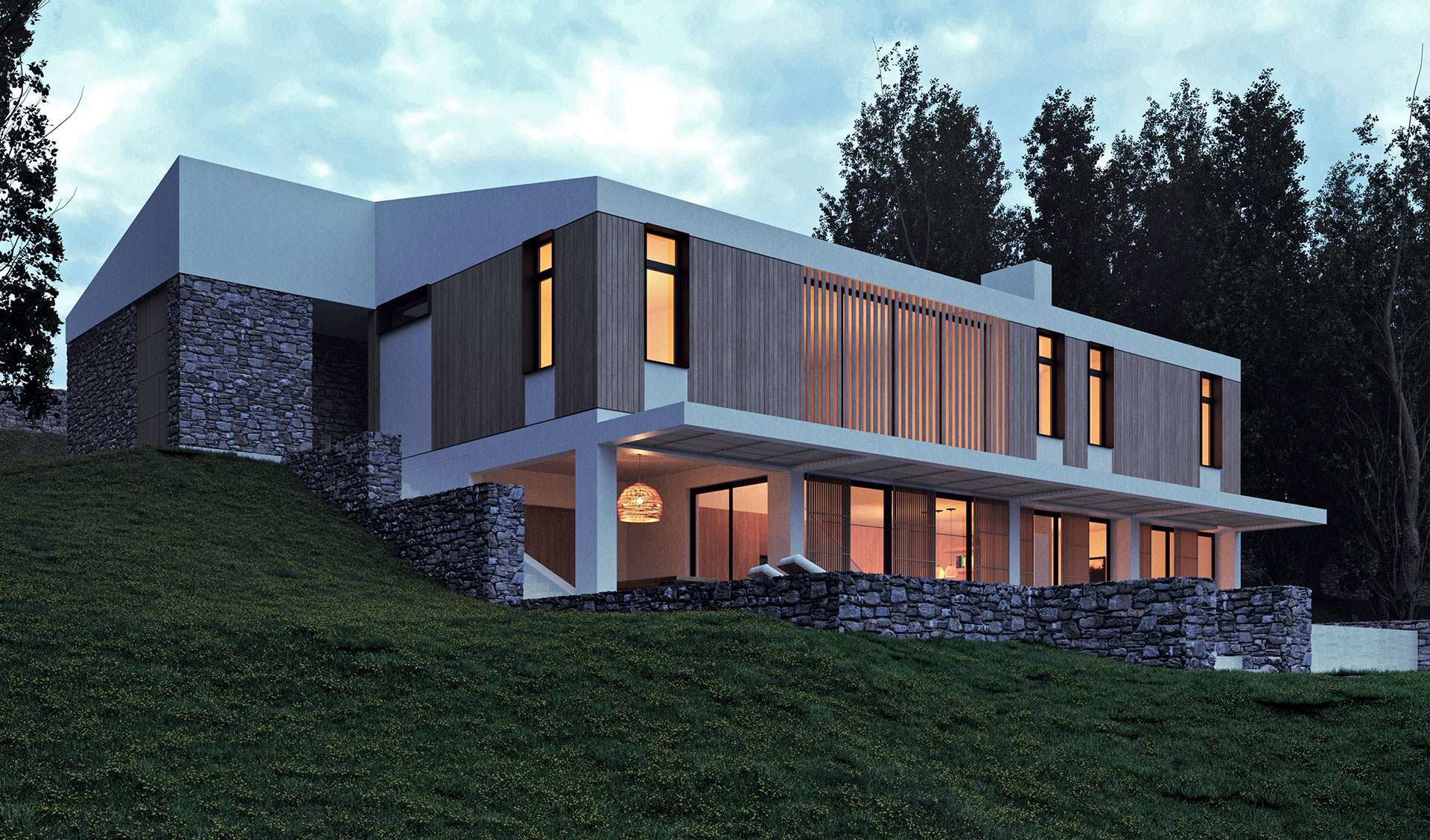
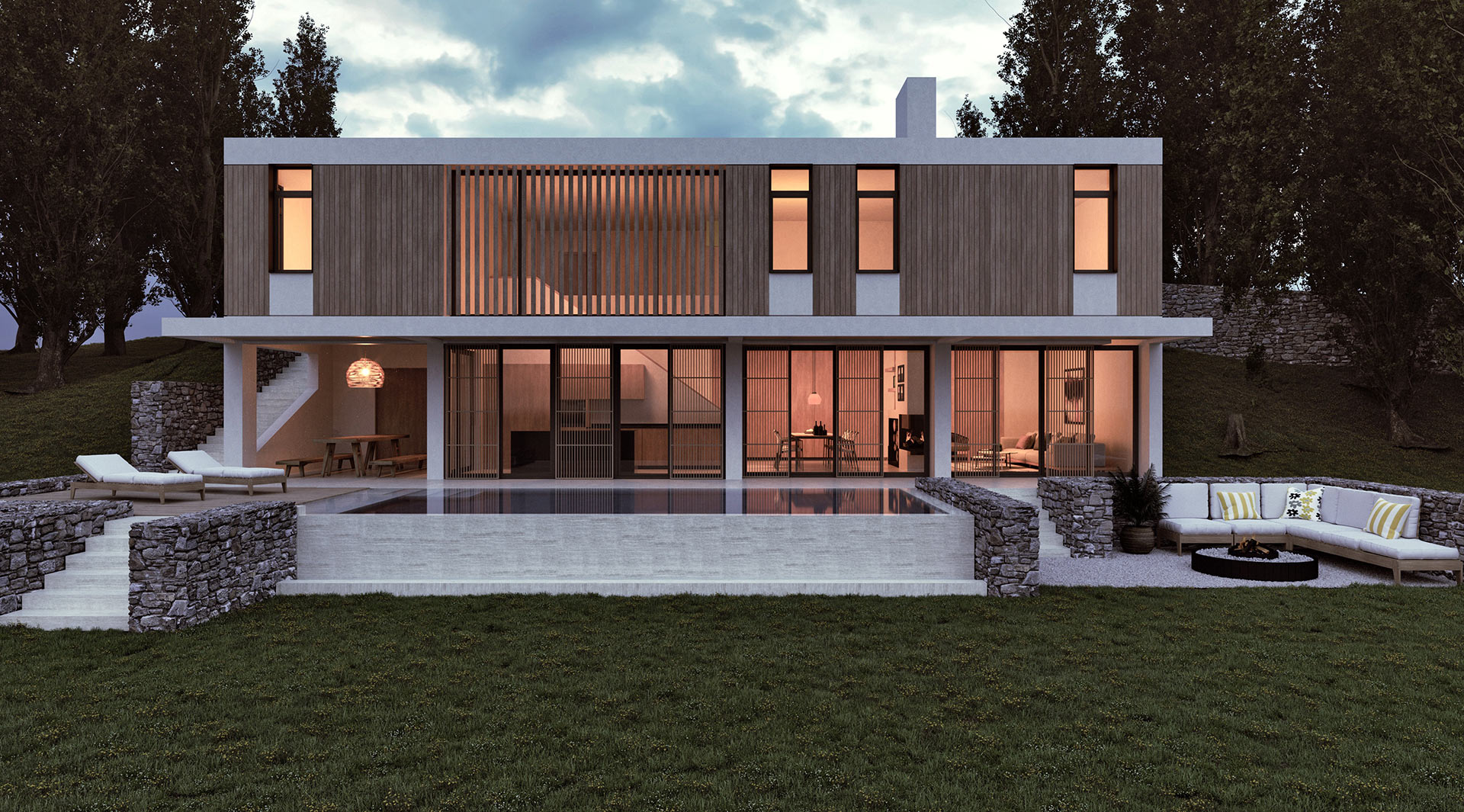
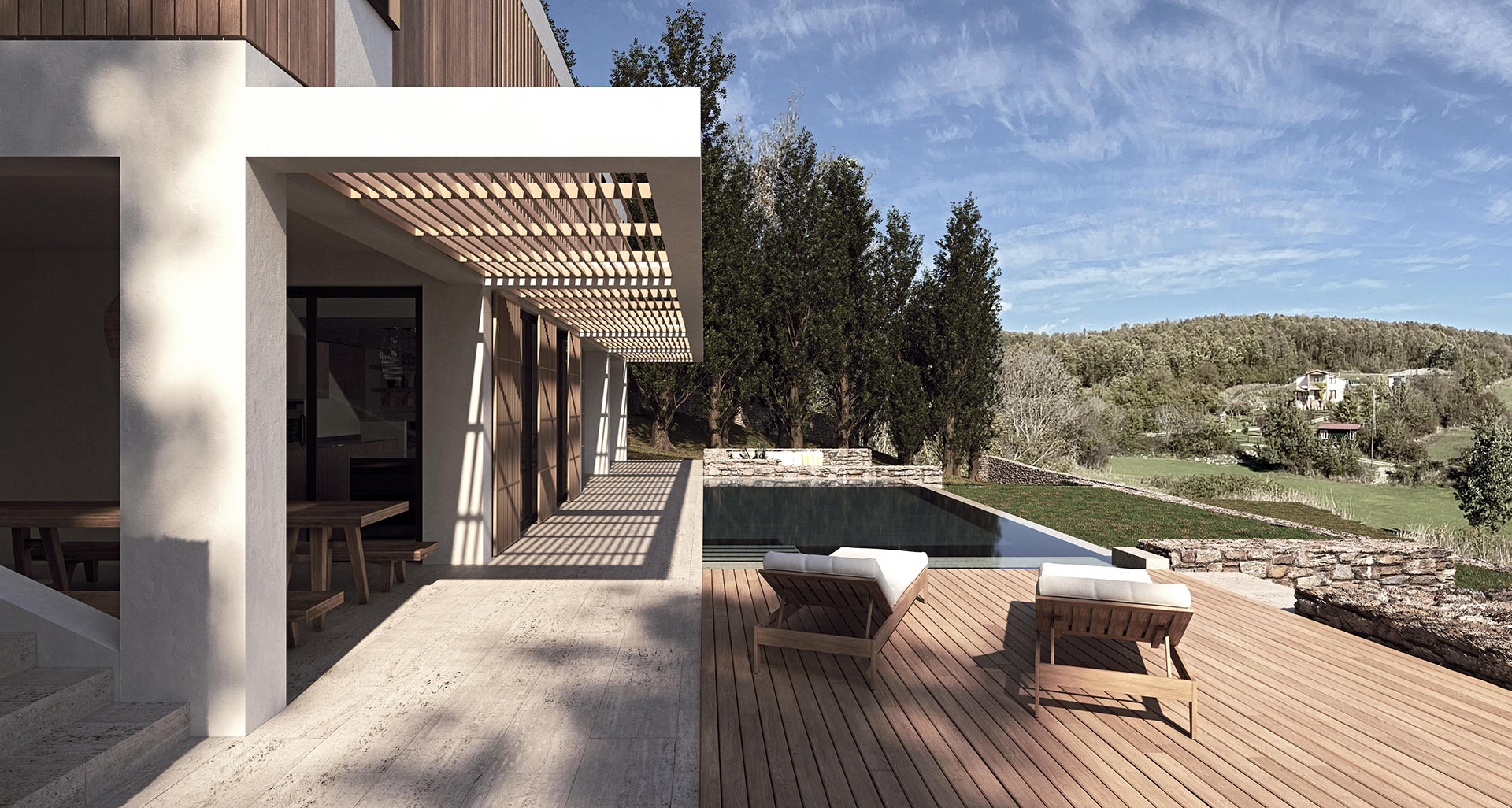
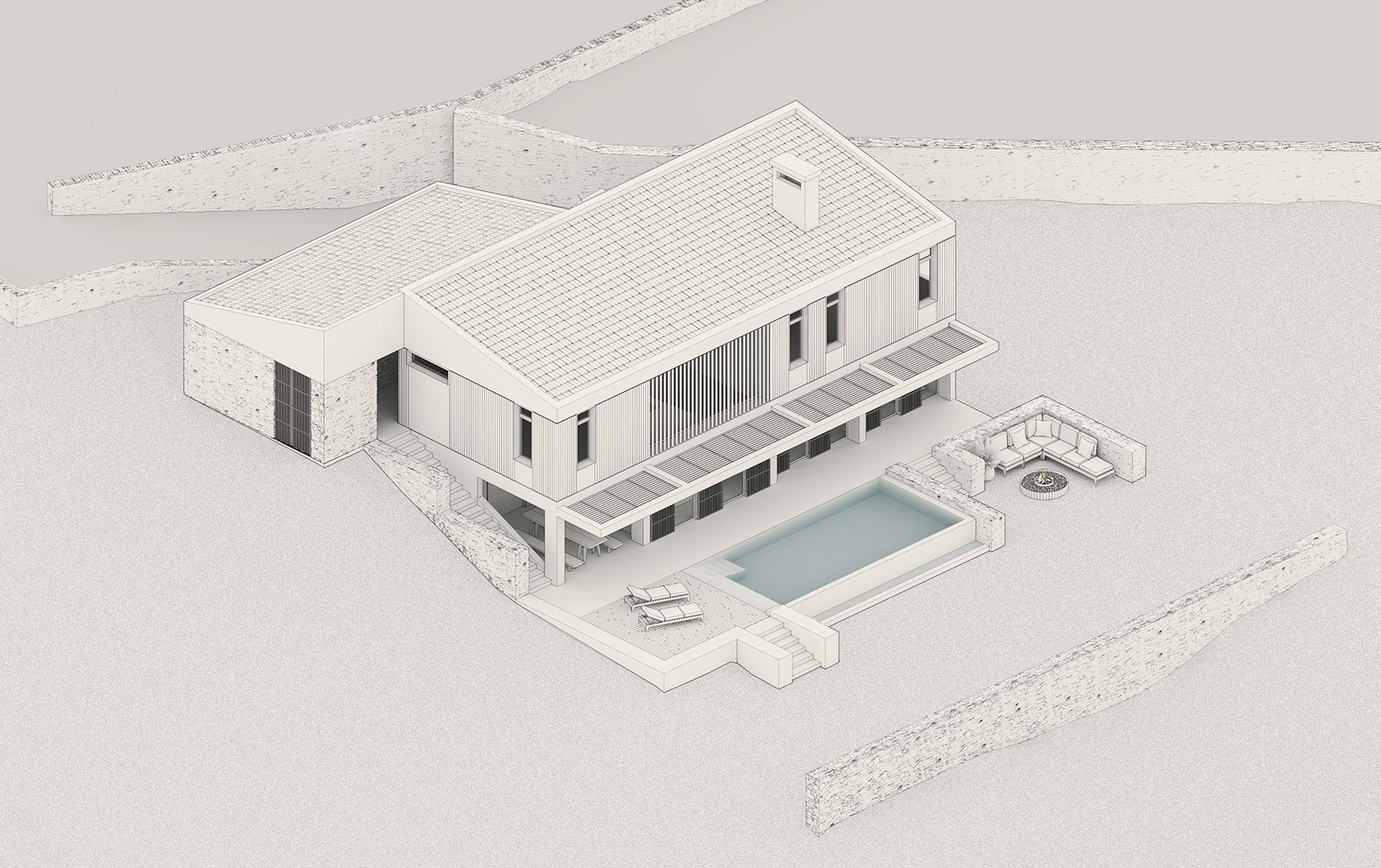
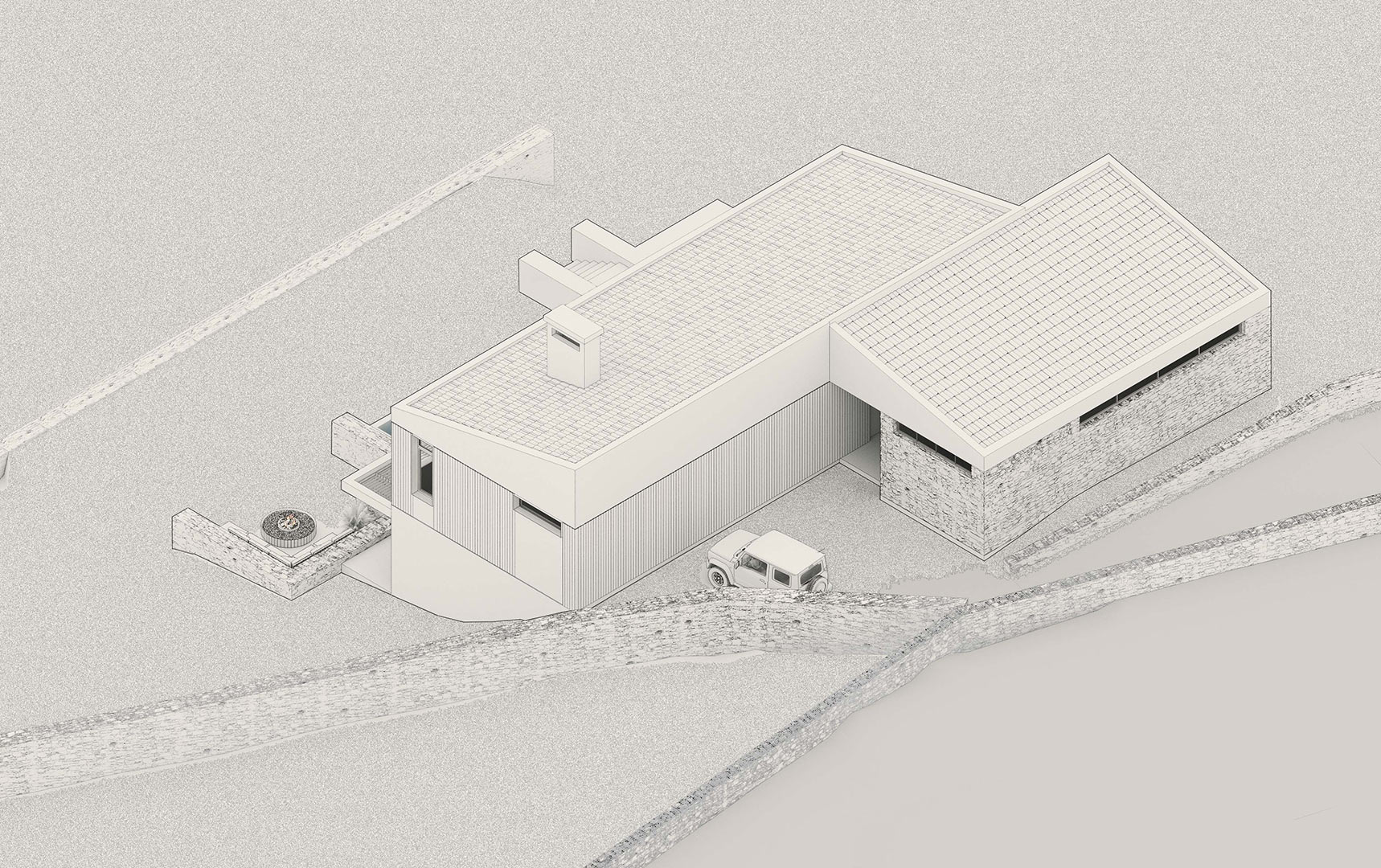
The fact that the woodworking workshop is a noisy and dusty space, the requirement that this area be both easily accessible from the house and isolated from the living areas, the need to establish a relationship with vehicle access for material entry and exit, and in addition to all these, the necessity to gather everything under a single roof due to zoning regulations, along with view orientation, natural light, and passive air conditioning, were considered as the main problems requiring solutions. This need was solved by the house and workshop sections being united under a single roof and separated by an entrance corridor, and by positioning the upper entrance level of the house to isolate it from the living areas below. While the building's harmony with the topography was achieved by placing it on the sloping terrain at two levels, this elevation difference was used as an advantage in isolating the spaces on the upper and lower levels from each other. A solution was created housing living areas on the lower level that are directly related to the view, have a permeable facade, and provide sun control with eaves, and bedrooms on the upper level with a more opaque facade where the eastern sun is controlled and thermal conditions are prioritized.
The open kitchen, which connects the entrance hall of the house, the stairs, the living room, the pool area, and the semi-open seating areas, established a relationship with the upper floor through the created gallery and became the focal point of the layout with its high-ceilinged volume. At this point on the facade, the wooden cladding was spaced out to let light in, and this focal point was made to be felt from outside the building as well.