Sivas Kızılırmak Bridge
National Architectural Design Competition for the Sivas Kızılırmak Bridge (1st Prize)
Design Team: Berke Hatipoğlu, Güliz Özorhon, İlker Fatih Özorhon
Structural Consultant: Muhsin Kıvan İpekar
Asisstants: Caner Üretmen, Ece Alan, Berent Mumyakmaz, İlke Yıldan, Varlık Yücel, Ender Yıldızhan
Architectural Brief
The design proposes a solution that interprets tradition through a contemporary lens—integrating with heritage via a modern approach. It aims to secure a place in the city's collective memory by being technologically feasible while providing viewing decks and recreational zones that both connect and contribute to the continuity of the riverbank.
Concept
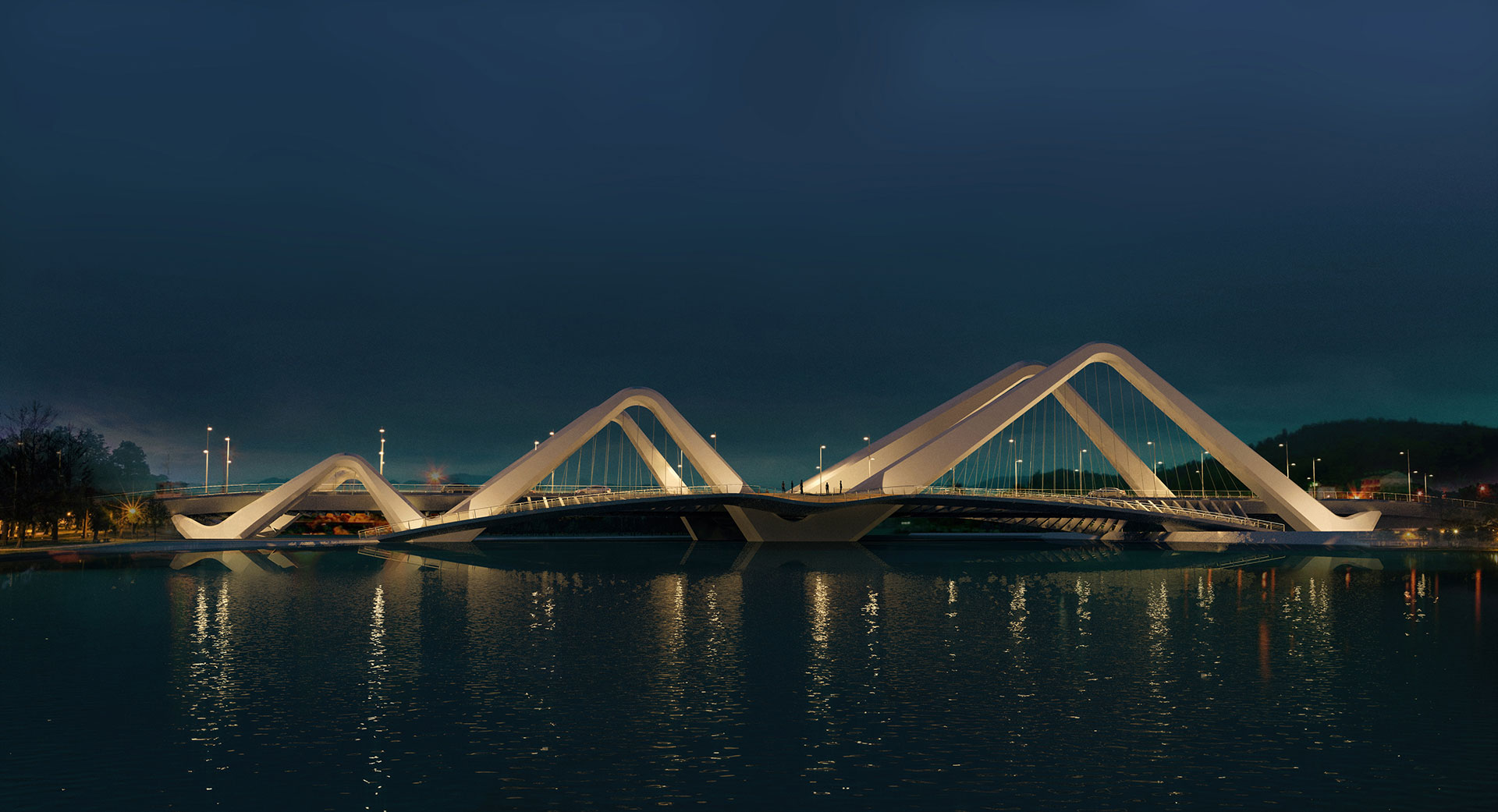
The design aims to establish a strong relationship with the site and its memory while simultaneously creating a new icon. This objective is achieved through a refined composition that is both calm and dynamic, powerful yet elegant.
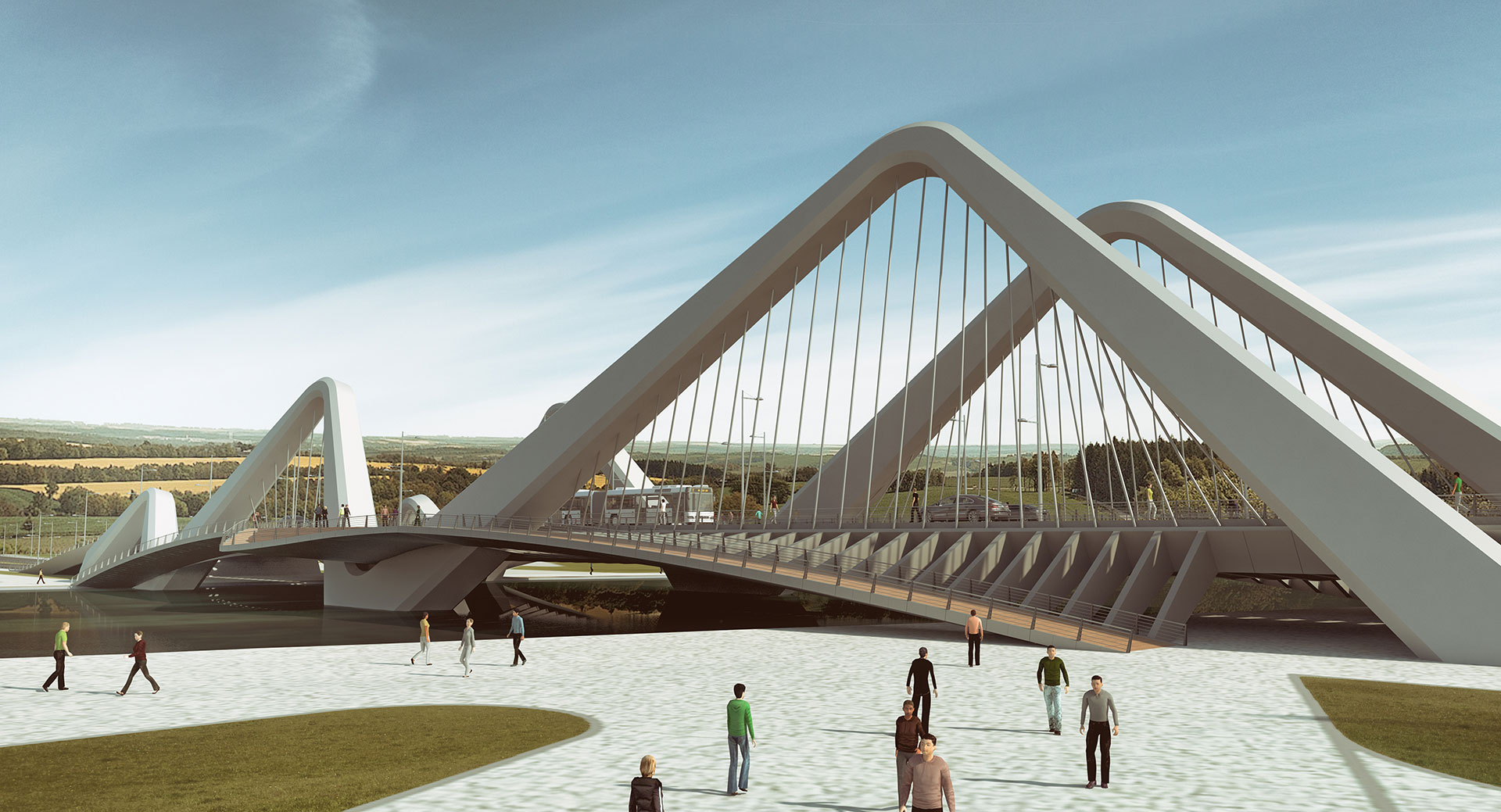
The core idea is connecting tradition to the future. Within this conceptual framework, the city center represents tradition, while the university represents modernity and the future. The forms of the load-bearing arches found in Sivas’s historical bridges, such as the Eğri Bridge and Kesik Bridge, are transformed into a contemporary structural system. These arches sharpen and become more dynamic, symbolizing movement and flow as they rise toward the university and the pursuit of knowledge.
Function /
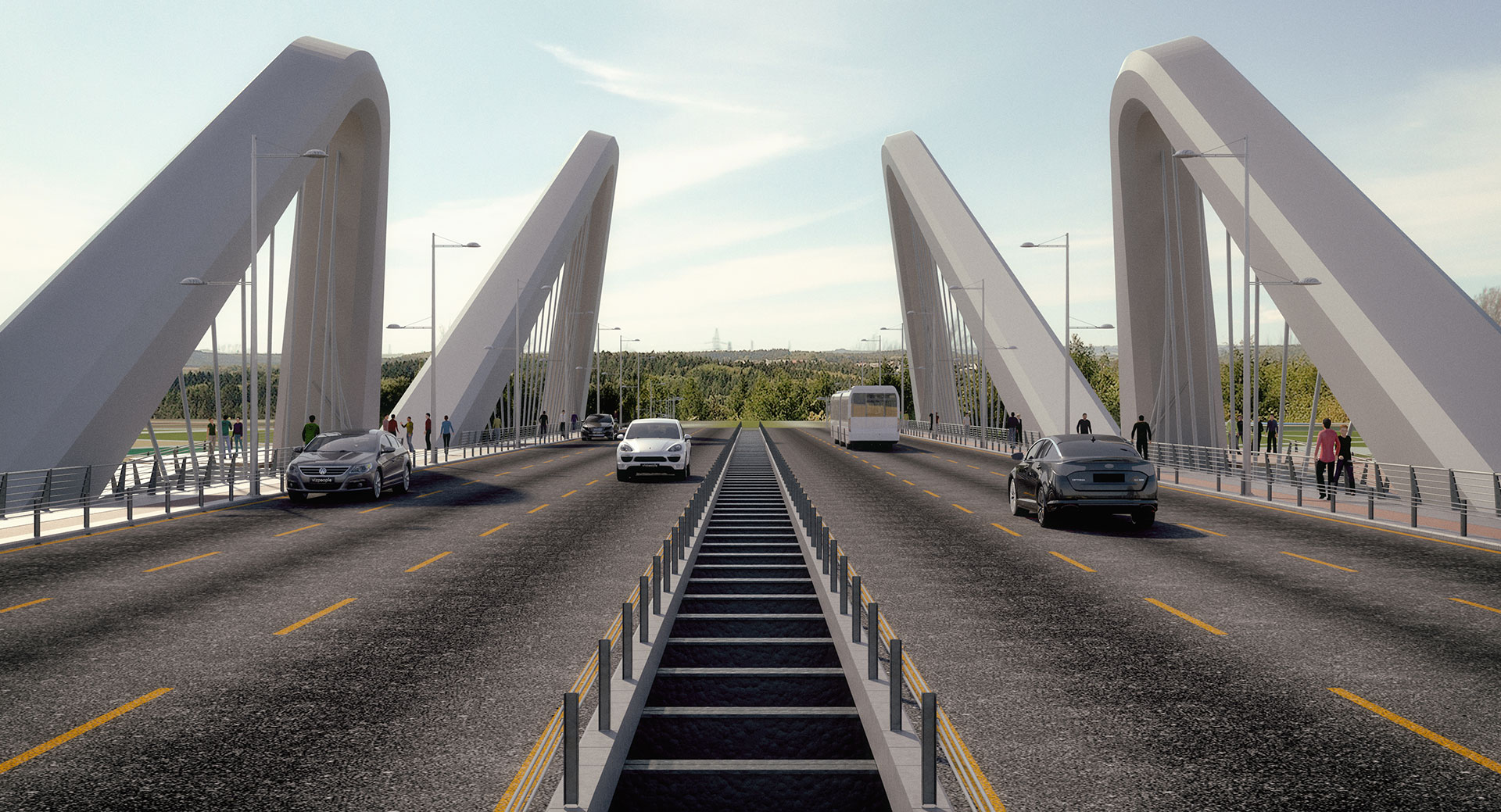
All pathways on the bridge are supported by beams suspended from these main arches. The bridge deck includes:
Vehicular Traffic: A 3-lane road (2 x 10.5 m).
Public Transit: A light rail system (2 x 4.5 m).
Pedestrian & Bicycle Paths: Dedicated lanes (2 x 3 m).
A 2-meter central void allows light to pass through the structure, visually lightening the bridge despite its significant width. Outside the arches, 5-meter cantilevered pedestrian bridges descend toward the recreational areas. As these pedestrian paths widen and tilt, they transform into terraces that bring visitors closer to the water, providing rest areas and scenic viewpoints. Beyond merely connecting two shores, the bridge succeeds in reuniting citizens with nature and the river.
Environment
The recreational areas surrounding the river are conceived as a green belt. This landscape design establishes a formal dialogue with the bridge’s architectural language, utilizing pedestrian paths that bridge the gap between the natural and built environments. This belt hosts spaces for sports, entertainment, and social gathering, ensuring a holistic integration with the city's fabric.